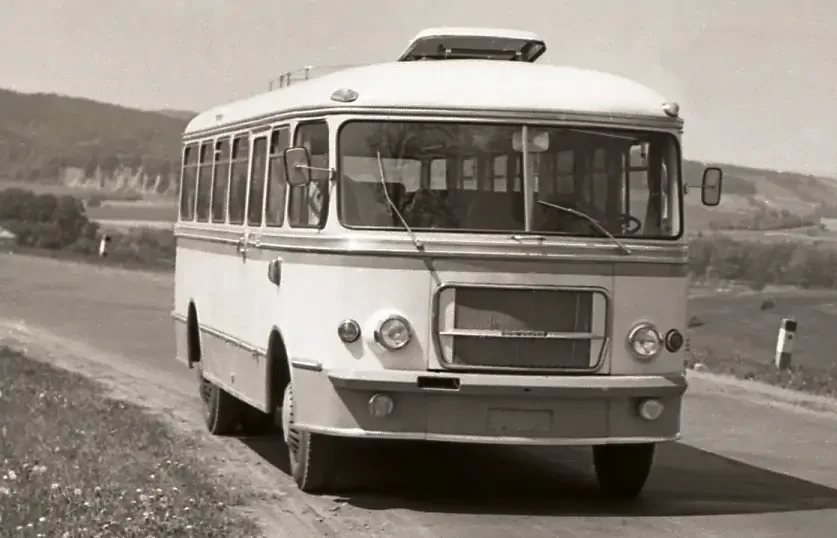
SAN buses were produced in the Sanok Bus Factory between 1957 and 1974. More than 40,000 units of this type of “travel cars” left the production lines. Following models from the SAN family: H-01, H-25, H-27 and H-100 were manufactured in versions dedicated for intercity passenger transport (marked with letter “A”) and city passenger transport (marked with letter “B”). The design documentation for the first SAN H-01 model was created at the Automotive Industry Design Office in Warsaw. All subsequent models were developed by Sanok designers and technologists. New solutions which were introduced, upgraded the buses, improved their safety, travel comfort, driver work as well as their aesthetic.
Vehicle durability also increased: from 100 thousand km to 400 thousand km of mileage.
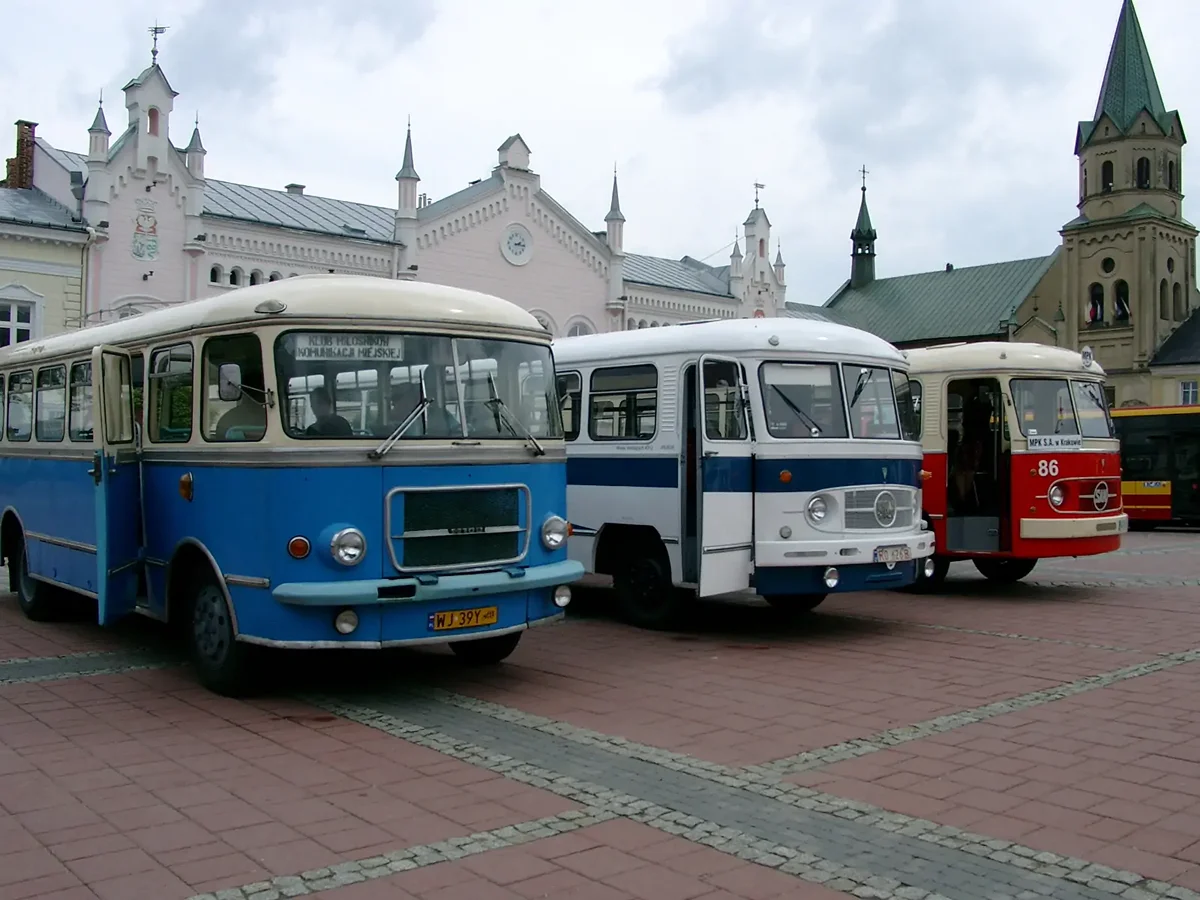

SAN H-01
- Length – 9320 mm
- Kerb weight – 4850 kg
- Engine– STAR, power 85 HP, located on front
- Chassis – self-supporting frame
- No. of places sitting/ standing: „A” 43 (including 8 reclined in aisle) / 0, „B” 33 / 17
- Maximum speed – 80 km/h
SAN H-25
- Length – 9320 mm
- Kerb weight – 5500 kg
- Engine – STAR, power 95 – 105 HP, located on front
- Chassis – self-supporting frame
- No. of places sitting/ standing: „A” 36 / 13, „B” 33 / 17
- Maximum speed – 80 km/h
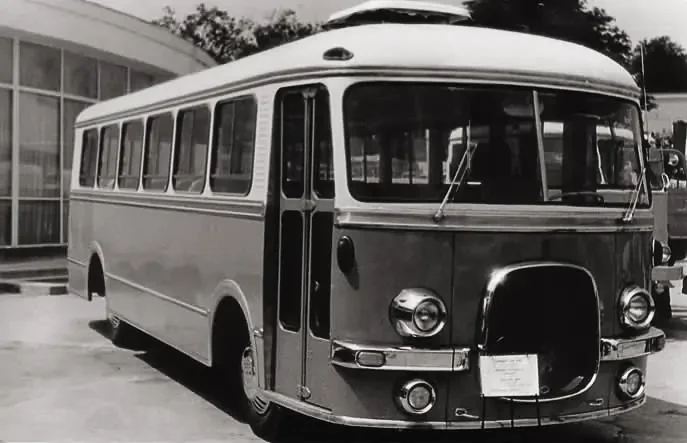
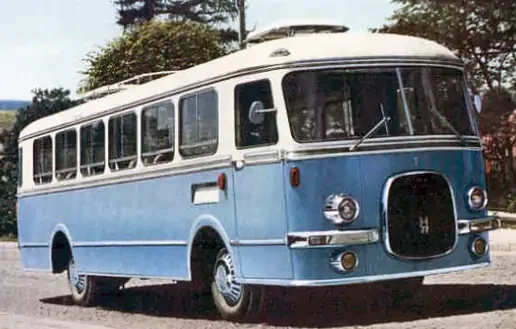
SAN H-27
- Length – 9320 mm
- Kerb weight – 5800 kg
- Engine – STAR, power 100 KM, located on front
- Chassis – self-supporting frame
- No. of places sitting/ standing: „A” 36 / 13, „B” 33 / 17
- Maximum speed – 80 km/h
SAN H-100
- Length – 8700 mm
- Kerb weight – 6000 kg
- Engine – STAR, power 100 – 105 KM, located on front
- Chassis – seated on the side member-based frame
- No. of places sitting/ standing: „A” 33 / 8, „B” 19 / 41
- Maximum speed – 93 km/h
AUTOSAN H9 buses
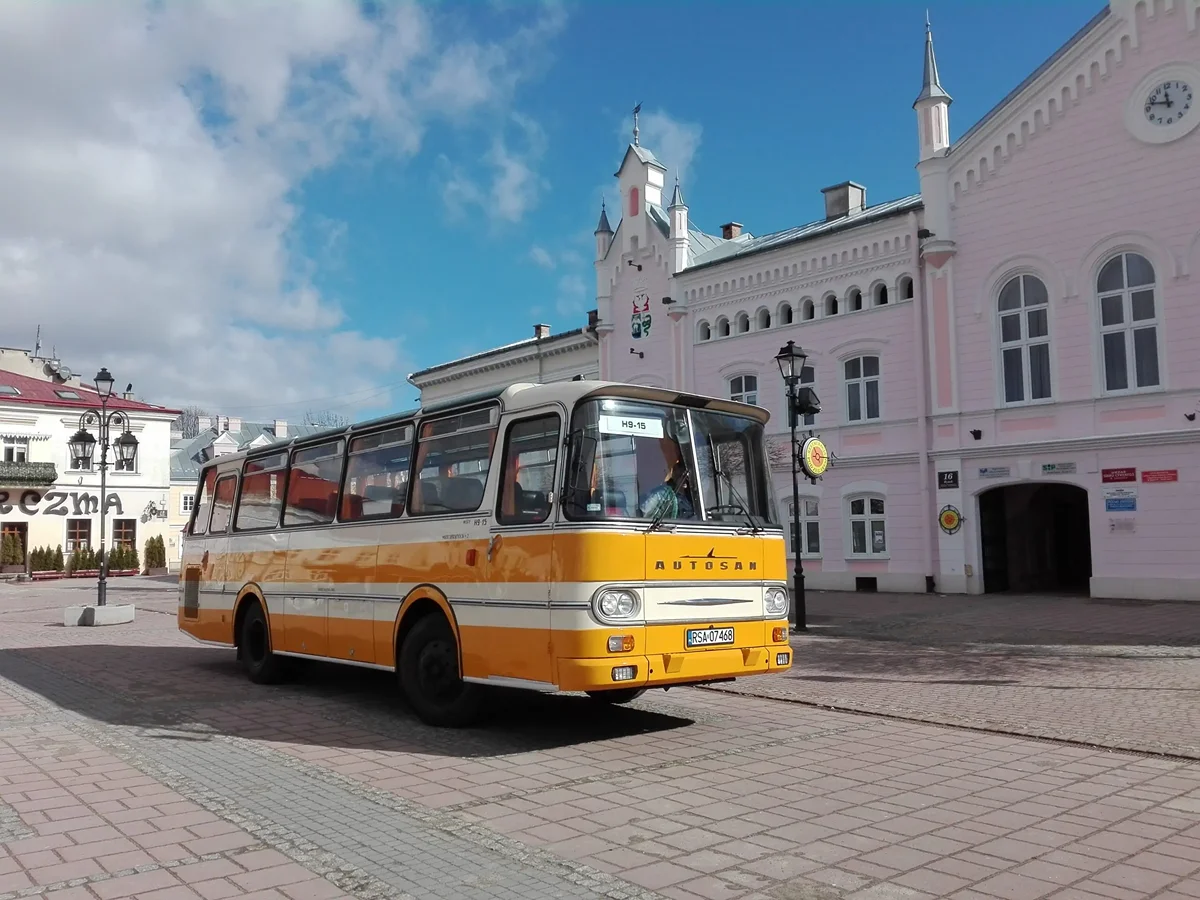
Production analyses carried out in the early 1970s showed that further modernisation of the SAN buses design was economically and technically unjustified. Work has begun on a completely new vehicle. The works on a completely new vehicle was started. As a result of these works, in 1973, AUTOSAN H9 new bus entered into serial production. The technical solutions used in it represented a fundamental advance in the development of construction and were equal to the world standards of the time. AUTOSAN H9 buses were produced in intercity and city versions.
Compared to their predecessors the vehicles were characterized by a number of innovative solutions and applications:
- licensed engine placed at the rear of the vehicle, with increased power,
- easy access to the engine and its accessories thanks to the use of a lifting rear flap,
- use of rectangular pipes for the body frame, proper anti-corrosion protection, immersion priming, modern stove varnish – solutions for increasing the vehicle’s service life,
- increased passenger capacity to 37 seats and 10 standing places in intercity version and 24 seats and 46 standing places in city version,
- improved driver’s working conditions by using a licensed, synchronized gearbox, a comfortable seat and a hydraulic assisted steering wheel,
- new interior arrangements increasing passengers comfort.

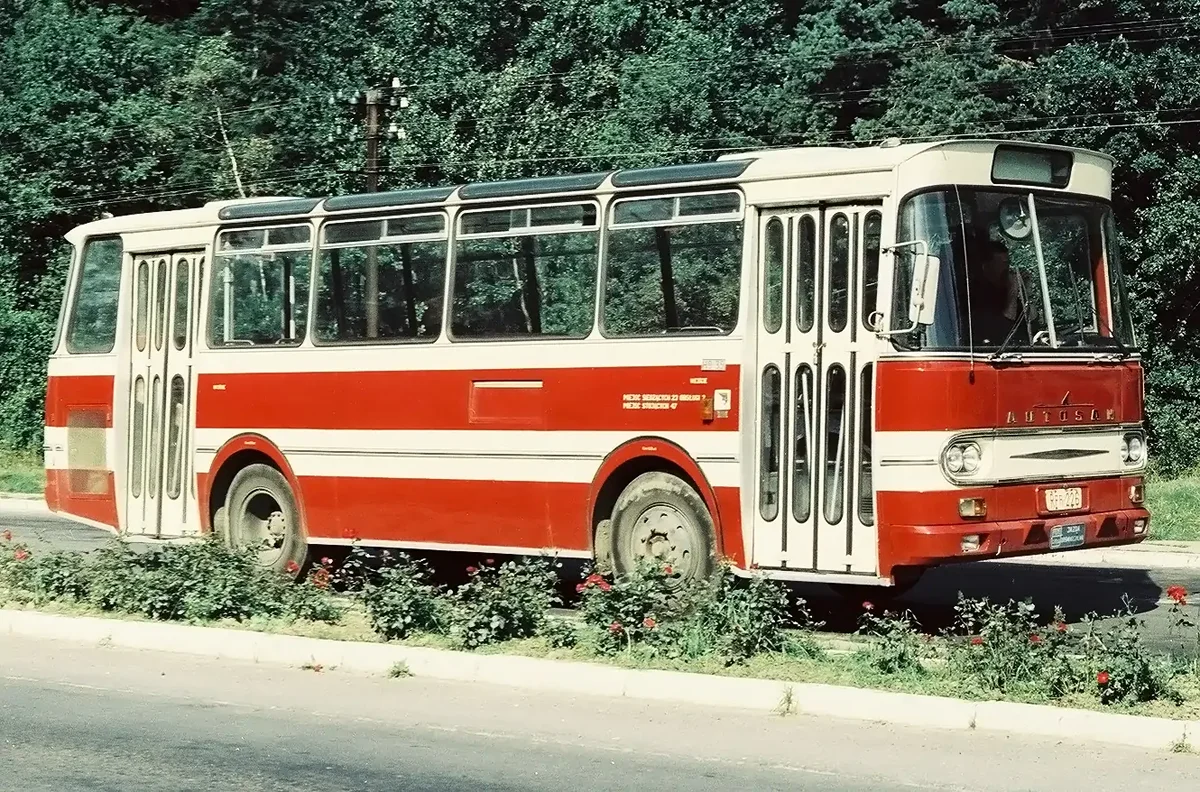
AUTOSAN H9 buses were produced between 1973 and 2003. More than 58,000 vehicles of this type have left the factory gates. A number of minor or major modernizations were introduced to adapt H9 buses to market requirements. These vehicles were operated on the domestic market as well as in Asia, Africa and South America. They were exported among others to Egypt, China, Vietnam, Ghana, Korea, Nigeria, Panama, Uganda, Costa Rica and former Soviet Union countries.
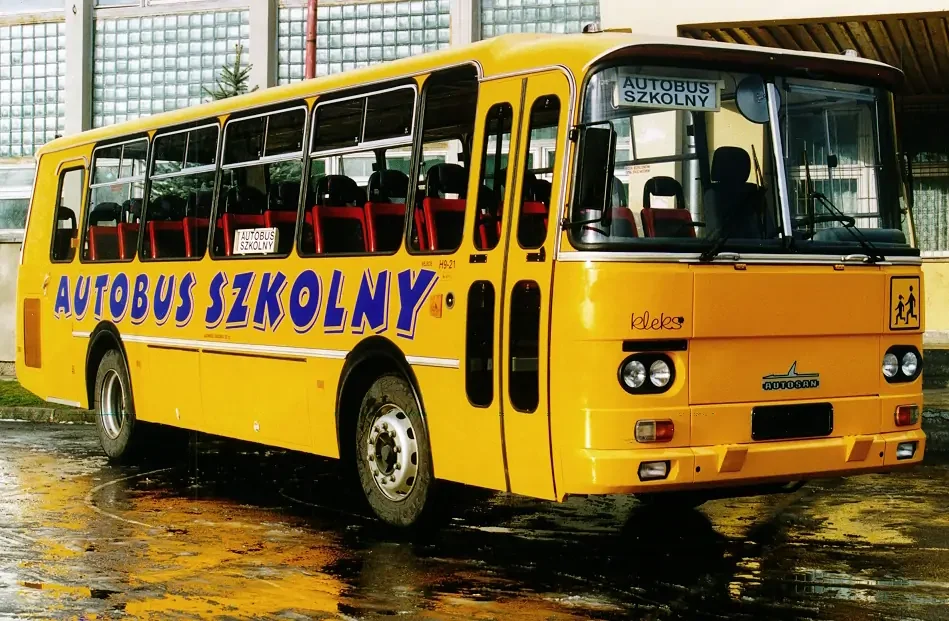
Buses from the H9 family were produced in many special application versions: conference bus, environmental pollution testing laboratory, cinema bus, ambulance bus, X-ray bus, blood donation bus, mobile post, mobile shop, school bus.
AUTOSAN buses have been an integral part of Polish landscapes for years.
This is what we say about them, “they transported whole Poland” and reached every corner of our country. They “played” in many Polish films and films were made about them. They had many supporters and collected very good opinions among carriers and passengers. Some of them still drive on Polish roads to this day.